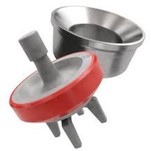
Polyurethane elastomers, also known as polyurethane rubber, are a class of high-performance polymer materials with excellent mechanical properties. They have been widely used in various mechanical applications due to their unique advantages in elasticity, toughness, abrasion resistance, and impact resistance.
The superior mechanical properties of polyurethane elastomers can be attributed to their chemical structure, which contains a large number of urethane groups (-NH-CO-O-) that form a network of cross-linked polymer chains. This cross-linking structure not only provides elastomers with excellent elasticity and flexibility but also makes them able to withstand high loads and impacts.
Compared with traditional rubber materials, polyurethane elastomers have several advantages in terms of mechanical performance. For instance, they have a higher tensile strength, tear strength, and abrasion resistance, which enables them to withstand harsh mechanical conditions without cracking or breaking down. Moreover, they can operate under a wide range of temperatures, from -70°C to 150°C, making them suitable for applications in extreme environments.

In terms of data parameters, the hardness of polyurethane elastomers can range from Shore A 60 to Shore D80, with tensile strength up to 60 MPa. The elongation at break can reach up to 800%, indicating excellent elasticity. These properties make polyurethane elastomers ideal for use in a variety of mechanical applications, such as conveyor belts, printing rollers, hydraulic seals, and shock absorbers.
Another advantage of polyurethane elastomers is their resistance to chemicals, fuels, and oils. They are also resistant to aging and provide long-lasting performance, even under exposure to UV light. The low compression set exhibits an ability to return to their original shape, even after being subjected to a certain amount of stress or deformation.

To sum up, polyurethane elastomers have been proven to be one of the most widely used elastomeric materials in the mechanical field, thanks to their unique performance advantages. They are suitable for use in various mechanical applications, especially where high wear and tear resistance, chemical resistance, and excellent elasticity are required. Their high-quality performance and adaptability make them the first choice for mechanical designers and engineers worldwide.