


Valve Assembly
Why Choose Us
One-stop Solution
After a period of development and accumulation, we not only broadened the product line, but also provided a series of solutions based on MDI, PPDI and NDI.
Professional Team
Our company has the first-class technical team. We can process and customize various polyurethane special-shaped parts according to the needs of domestic and foreign customers.
Our certifications
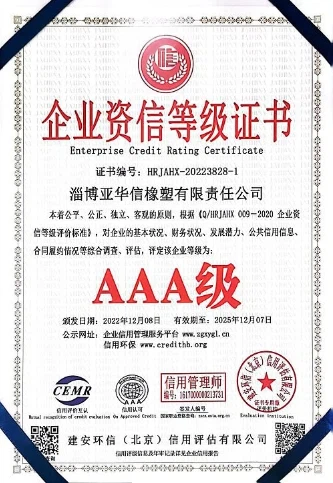
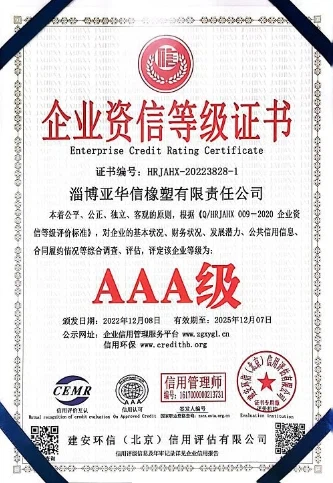
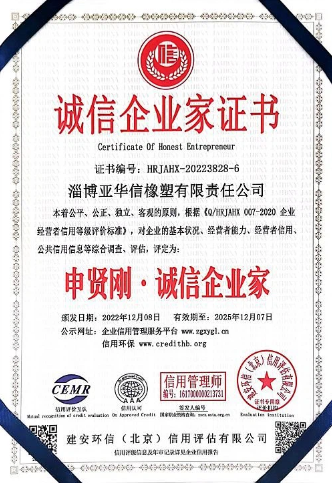
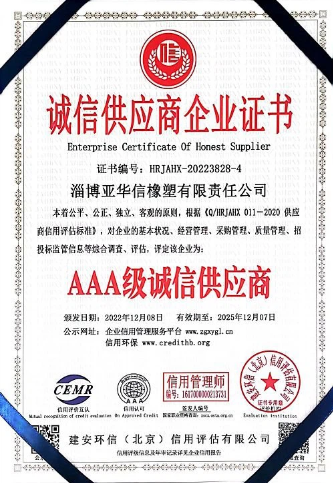
We passed OCCUPATIONAL HEALTH&SAFETY MANAGEMENT SYSTEM CERTIFICATION, QUALITY MANAGEMENT SYSTEM CERTIFICATION( ISO 9001) an so on.
Rich Experience
With the rich experience, professional technology and national influence of XinRuiTuo in the polyurethane industry, we strive to let more decision-makers in the country understand the advantages and benefits of high-quality polyurethane elastomers.
What is Valve Assembly
A valve assembly can be defined as a system that centres around the valve's mechanism, and also includes auxiliary devices such as the casing, actuation mechanisms of both electrical and non-electrical kinds, and even sensors. This system is important for regulating the flow of fluid or gas in a machine. The individual valves in this system are typically made of metal or plastic and are generally operated via a solenoid. The assembly also includes one or more check valves, which allows the fluid or gas to flow in one direction but not the other. While valve assemblies can be obtained as a complete set for configurations of larger sizes, individual parts can be purchased separately and assembled to reduce the cost of operation.
-
 Frac Pump Partsfrac pump parts. Operating Temperature Range:-80-80(℃). Friction coefficient:0.001. Impact strength:1000(MPa). Suitable for a variety of fluids. Sample processing. Provide free system design forAdd to Inquiry
 -
 Fluid End Valves And SeatsFluid end valves and seats. Provide free system design for customers. API standard valve assembly. Polyurethane inserts. Perfect after-sale services. Forged alloy structureAdd to Inquiry
 -
 Full Open Valve AssemblyFull Open Valve Assembly. Operating Temperature Range: -80-80(℃). Friction coefficient:0.001. Impact strength:1000(MPa). Suitable for a variety of fluidsAdd to Inquiry
 -
 Three Web Valve AssemblyThree Web Valve Assembly. Sample processing. Provide free system design for customers. Provide free product selection guide. Minimum order quantity: 100piecesAdd to Inquiry
 -
 Four Web Valve AssemblyFour Web Valve Assembly. Fast delivery;. Minimum order quantity: 10 sets. Lead time can be negotiated. Logo can be customizedAdd to Inquiry
 -
 Mud Pump ValveMud Pump Valve. Forged alloy structure. worn surface with deep carburation . API standard precision machined. Polyurethane inserts. Rubber insertsAdd to Inquiry
 -
 Fracturing Pump ValveFracturing Pump Valve. Customized logo/color/packaging. Factory direct sale. Best price. Fast deliveryAdd to Inquiry
 -
 API Standard Valve AssemblyMud Pump Valve. High quality products. Fast delivery. OEM services. Perfect after-sale servicesAdd to Inquiry
 -
 Mud Pump Valve AssemblyMud pump valve assembly is produced according to API standard by Shandong XinRuiTuo Precision Industry Co., LTD. The products has passed ISO9001 quality system as well. We use high quality alloyAdd to Inquiry
 -
 Fracturing Pump Valve AssemblyFracturing Pump Valve, manufactured by Shandong XinRuiTuo Precision Industry Co., LTD, owns various sizes from API-3# to API-9#. We have been producing a wide range of valve seat assemblies,Add to Inquiry


- Mob: +86-13589515144
- Email: sales@xinruituoseal.com
- Add: Room 203, 500 meters south of the Village Committee of Nanjiaosong Village, Hutian Sub-district Office, Zhangdian District, Zibo City, Shandong Province, China
Benefits of Valve Assembly
Enhancing safety
Preventative maintenance performed by properly trained valve technicians is the number one thing you can do to ensure the safety of your equipment and of your personnel. By keeping your valves working properly, preventative maintenance reduces your risk of an emergency and of the catastrophic consequences–like an explosion–that could result from a valve malfunction.
Saving money
Benchmarking studies have shown that companies waste millions of dollars by frequently replacing valves when all the valves actually needed was some preventative maintenance.Preventative maintenance extends the life of your valves, so you have to replace them less often, and also decreases the amount of repair that must be performed throughout the valve's usable life. For example, for sleeved plug valves in highly corrosive applications, you may be able to fix a leakage problem and get years of extra life out of your valves simply by tightening the bolts.
Reducing the need for shutdowns
Valve Assembly maintenance decreases the occurrence of shutdowns, both emergency and planned. With today's technologies, a lot of maintenance can be performed while valves are inline and under pressure.
Reducing fugitive emissions
Valve Assembly that are operating at a substandard level are a major cause of fugitive emissions. A study published a few years ago in Chemical Engineering magazine found that 60% of fugitive emissions in refineries can be traced to leaking valves. Preventative maintenance keeps your valves working in top shape, which in turn makes your projects kinder to the environment.
Types of Valve Assembly
Full Open Valve Assembly
Full Open Valve Assembly is composed of valve disc, valve cover, valve seat, guide claw, nut, etc. The valve insert buffers and seals the valve.The valve body and valve seat are made of alloy steel using a precise and reasonable heat treatment process, producing a core with good toughness, fatigue resistance, impact resistance, and tight angle fit as well as a high level of surface hardness.Valve inserts are made of oil-resistant rubber, polyurethane, and other wear-resistant sealing materials.The valve ball leaves the valve seat when the fluid flows through, creating the flow channel and allowing the fluid to pass through.When the fluid flows reversely, under the action of pressure (or other forces), the valve ball sits on the valve seat, the flow channel is closed, and the fluid cannot pass through the valve.
Three Web Valve Assembly
Three Web Valve Assembly is composed of valve body, valve seat and valve insert, etc. The valve seat is forged from high alloy steel. We process the product in a strict way according to the provisions so that we can guarantee the high degree of completion, accurate size, high strength and good toughness. We use heat treatment method with surface hardness HRC = 60. For the valve seal, we choose wear- resistant polyurethane material in order to keep the product with high performance and it is easy to be replaced.
Four Web Valve Assembly
Four Web Valve Assembly of our company is high performance liquid end fittings. It is widely used in many occasions, such as Petrochemical industry, energy industry, metallurgical industry, power industry, paper-making industry and sewage industry, etc. We choose 20CrMnTi material. Carburized layer depth can reach 1.8-2.2. We choose polyurethane as the valve seal, which is wear resistant. Our products have high-quality materials, small product volume, and long use time and easily used. Besides, we own complete product specifications.
Mud Pump Valve
Mud Pump Valve is made of forged alloy steel with deep carburized wear surface. In order to provide a high-quality finish and precise dimensions, the valve and valve seat are manufactured of a single piece of premium forged alloy steel that closely follows the manufacturing process specification. We provide a wide selection of valves and seats, such as full open valve and seat and 3 web or 4 web design valve and seat. About the full Open valve assembly: The valve has four guide wings and a fully open seat. Either they are evenly forged with the valve body or they are inertia welded to the valve body. The polyurethane valve insert can be easily snapped on.
Application of Valve Assembly

Valves in the Food Industry
In the food industry, industrial valves are used to control the flow of ingredients and products, from liquids to gasses, in processes such as the production of beverages and packaged foods. Butterfly, ball, and diaphragm valves are some of the most common in the food industry due to their ability to withstand hygienic environments and resist corrosion.

Valves in the Pharmaceutical Industry
In the pharmaceutical industry, industrial valves are used to control the flow of liquids and gasses in critical processes, such as the manufacture of medicines and biological products. Diaphragm, ball, and needle valves are some of the most common in the pharmaceutical industry due to their ability to withstand sterile environments and resist corrosion.

Valves in the Water and Wastewater Industry
In the water and sanitation industry, industrial valves are essential for controlling pressure and flow in water supply and treatment systems, as well as in the treatment of wastewater. Gate, globe, and check valves are some of the most common in the water and sanitation industry due to their ability to withstand high pressures and resist corrosion.
Components of Valve Assembly
Valve Body
The valve body not only houses other valve parts including the disk and seat but it also is the main pressure-retaining part of the valve. It is also where fluid passes through the valve as both ends of the valve body are connected with piping. The ends can either be threaded or flanged or finished with butt-welding types that depend on the size and pressure of the piping system. Valve bodies come cast or forged in a variety of materials including cast steel, stainless steel, and alloy steel depending on the requirements of the valve as a whole.
Stem
The valve stem's purpose is to transfer the required motion to either the disc, plug, or the ball in order to open and close the valve. It is connected to the valve actuator, lever, or handwheel at one end and the valve disc at the other end.In a gate or globe valve, the stem uses the linear motion of the disc to open or close the valve while in plug, ball, and butterfly valves, the disc is rotated to open or close it.
Bonnet
The bonnet is the second pressure-retaining component of a valve and is also referred to as the cover. It is connected to the valve body to create the valve enclosure. In the case of globe, diaphragm, gate, or stop check valves, it has an opening where the valve stem passes through and provides access to the internal parts of the valve when maintenance is needed.
Seat
The seat is one of the main parts of the valve that directly affects the rate at which the valve leaks and is an integral part of the valve body. Valves can have one or more seats depending on the type of valve. For example, a gate valve has two seats, one that sits on the upstream side and the other on the downstream side.
Disc
The disc is the part of the valve that either allows or stops the flow, depending on where it's positioned. A valve disk can be forged, fabricated, or cast.
Trim
Valve trim is the collective term for the removable or replaceable internal parts that come into contact with the flow medium. These parts include the valve seat, disc, glands, spacers, guides, bushings, and internal springs.
Materials of construction
Know the chemical compatibility requirements. The valve materials need to be compatible with the gases or liquids flowing through it. Plastic valves usually resist harsh or corrosive chemicals better than metal valves.
Performance requirements
Determine the pressure and temperature requirements. Find out both the temperature and pressure ranges where the valve will be installed. Metal valves tend to withstand higher temperatures and pressures than plastic valves. Metal valves are also usually best for pressurized gases. This is because they tend to be stronger than plastic valves.
Valve Assembly have special requirements
Be sure the new Valve Assembly will work as expected. Look at the response time needed as well as the cracking pressure required to open the valve.Another consideration is normally closed vs normally open. There are basic Valve Assembly designs that require positive downstream pressure to open. These are usually referred to as normally closed Valve Assembly. There are other designs that require a positive backpressure to close. These are usually called normally open Valve Assembly. An appropriate choice between these two can improve Valve Assemblye reliability. It is usually best to base this decision on whether the valve is usually open more or usually closed more during normal system operation.
Maintenance
Don't forget to consider ongoing maintenance. Any valve choice should include attention to maintenance requirements. This is important for both valve reliability and application stability.A good example of this are ball valves. They resist clogging, jamming or malfunctioning. But they are not suitable for adjusting flow. Using them to control flow can lead to leaking or premature failure.
Commonly used assembly methods for Valve Assembly
When the valve is assembled using the complete interchange method, each part of the valve can be assembled without any trimming and selection, and the assembled product can meet the specified technical requirements. At this time, the valve parts must be processed completely in accordance with the design requirements to satisfy the requirements of dimensional accuracy and geometric tolerances. The advantages of the complete interchange method are: assembly work is simple and economical, workers do not need a high degree of skill, the production efficiency of the assembly process is high, and it is easy to organize assembly lines and organize specialized production. However, in absolute terms, when adopting a complete replacement assembly, the machining accuracy of the parts is higher.
The valve is assembled by matching method, and the whole machine can be processed according to economic precision. When assembling, a certain size with adjustment and compensation function is selected to achieve the specified assembly accuracy. The principle of the matching method is the same as that of the repair method, except that the method of changing the size of the compensation ring is different. The former is to change the size of the compensation ring by selecting accessories, and the latter is to change the size of the compensation ring by trimming the accessories. For example: the top core and adjustment gasket of the control valve type double-disc wedge gate valve, the adjustment gasket between the two bodies of the split ball valve, etc., is to choose special parts as compensation parts in the dimensional chain related to assembly accuracy. Adjust the thickness of the gasket to achieve the required assembly accuracy.
The valve is assembled by the repairing method, the parts can be processed according to economic precision, and then a certain size with adjustment and compensation function is repaired during assembly to achieve the specified assembly goal. For example, the gate plate and valve body of the wedge gate valve, because the processing cost required to realize the interchange is too high, most manufacturers use the repair method. That is, in the final grinding of the gate sealing surface to control the opening size, the plate should be matched with the opening size of the valve body sealing surface to achieve the ultimate sealing requirement. Although this method adds the plate matching process, it greatly simplifies the dimensional accuracy requirements of the previous processing process. The special personnel of the plate matching process are skillful, and generally speaking, it will not affect the production efficiency.
How to Maintain Valve Assembly


Preventive vs. Predictive measures
Valve maintenance techniques come in different forms. Depending on the system and the type and number of valves within, operators may want to use a preventive or predictive maintenance processes or both.Preventive maintenance relates very much to the previous example of basic vehicle care and valve cleaning. It can be described as maintenance that is performed routinely to identify any issue that may result in future valve malfunction or failure. The idea is to perform services that help avoid breakdown. Another great example to put on the maintenance list of items to keep in mind is lubrication. This is a commonly overlooked step that goes a long way toward increasing valve life expectancy (depending on the type). Regular lubrication not only helps moving parts work easier and limits wear but it also helps seal the valve.
Keep valves clean
One way to keep a valve clean is to simply scrub the exterior of a valve with a rag or brush. This proactive measure keeps dust and grime from building up around the valve stem and inhibiting motion of other moving parts. This is also a perfect time to look for leaks (which can be identified by corrosion, rust or mineral deposits). Severe leaks can indicate the need for new internal parts or seals.Bypassing valves or doing a complete system shutdown for more thorough cleaning is highly recommended. Though it does not need to be done as often, it is extremely important to clean and inspect the internal components of a valve. This can be accomplished by taking the valve apart and cleaning the inside of any build-up. Check all moving parts for sign of wear. If they appear to be worn, brittle or broken replace them right away.
Preparation
No matter what method of maintenance is chosen and how prepared one may be, the reality is that failures and malfunctions happen. Though it's important to do as much as possible to avoid these situations, preparation should always be at the forefront when disaster strikes.Preparing for unexpected setbacks is just as much part of valve maintenance as cleaning. This all starts with keeping a clean and tidy area around the valves. If a valve were to malfunction and quick corrective action was needed, a clear surrounding area allows faster and uninterrupted repair. Standard operating procedures known to anyone who may be providing maintenance or repair is also a must. Clearly printed step-by-step instructions for cleaning, repairing or replacing valves ensures that the proper steps are being taken each time, no matter who is performing the task or in what situation.
Routine health check-ups
It's easy to put valve maintenance on the back burner. When things are running smoothly and times are busy, taking time out of the day for something that's not urgent is challenging. However, as you've read, a few minutes to clean and inspect valves goes a long way to keeping the systems running efficiently and effectively.Scheduling consistent, routine cleanings is key for any valve system. We suggest designating a specific time of the week or month to go through a checklist of valve maintenance so it becomes part of your overall operation. Avoiding valve related emergencies means recognizing the signs in advance and taking necessary action before disaster strikes.
Our Factory
Shandong XinRuiTuo Precision Industry Co., Ltd integrates scientific research, development, production, sales and service. It is a modern technology company dedicated to the production of polyurethane polymers. The company has a professional Research and Development team and professional testing equipment. The company registered capital is 21 million and annual output value is around 80 million. The factory area is around 10,000 square meters. The company's productivity can reach 20,000 tons each year.The main products are: polyurethane sieve plate, pump piston, polyurethane sealing ring, roller coaster wheel, monorail wheel for coal mine, valve rubber, cotton picker accessories, superior rubber pad on die cutting machine, Polyurethane cylinders, etc. In addition, our company has the first-class technical team. We can process and customize various polyurethane special-shaped parts according to the needs of domestic and foreign customers.


certificate


FAQ
